Bathsheba and Troy's secret marriage
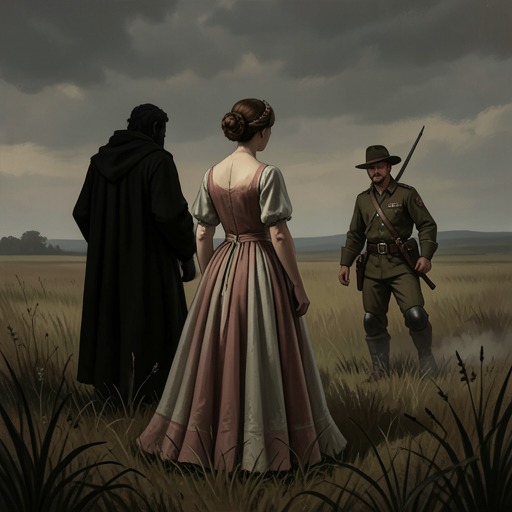
Far from the Madding CrowdBathsheba and Troy's secret marriage is a turning point whose disclosure transforms private courtship into public and economic consequences. The wedding itself is absent from the supplied scenes; instead, Hardy lets its existence emerge through a newspaper notice, first confronting Boldwood and then witnessed by farm workers at Bathsheba's house. This delayed revelation makes the marriage feel less like a celebrated union than an accomplished fact whose implications others must absorb.
Background and Circumstances
Bathsheba had entered the story as the mistress of her farm, determined to manage it herself. At her first meeting with the workers, she announced that she had dismissed the bailiff for theft and would have no replacement, because she intended to run the business with her own head and hands. She also asserted that being a woman did not mean she could not distinguish good from bad management. Her authority was practical as well as declarative: at sheep-shearing she watched the work closely, checked that the animals were not carelessly cut, and attended to the accuracy of the farm’s marks.
That independence existed alongside an unresolved romantic conflict. Boldwood’s offer of marriage was, by the narrator’s account, respectable and advantageous, and Bathsheba esteemed him; she nevertheless did not want to marry him. She recognized that her own earlier conduct had helped create the situation and felt an obligation to accept its consequences, yet reluctance remained. Her tendency to reason carefully without always allowing reason to govern her actions forms part of the context for her choice of Troy.
Troy’s attraction had already entered the working life of the farm. Shortly after the shearing, Bathsheba saw him helping with haymaking, where he had joined the laborers voluntarily. His appearance in the fields placed him amid ordinary farm work, but the narrator also characterizes his address to women as relying on flattery. The contrast between Bathsheba’s managerial vigilance and Troy’s persuasive presence anticipates the unequal pressures that the marriage will bring into the household.
The Marriage Is Revealed
The decisive disclosure comes when Boldwood tries to secure Troy’s compliance by offering money. He proposes settling five hundred pounds on Bathsheba, rather than on Fanny, so Troy can marry her promptly; when Troy asks for money immediately, Boldwood gives him the twenty-one pounds he has with him. Boldwood insists that Bathsheba must know nothing of this cash arrangement, while Troy says she must at least be consulted or informed.
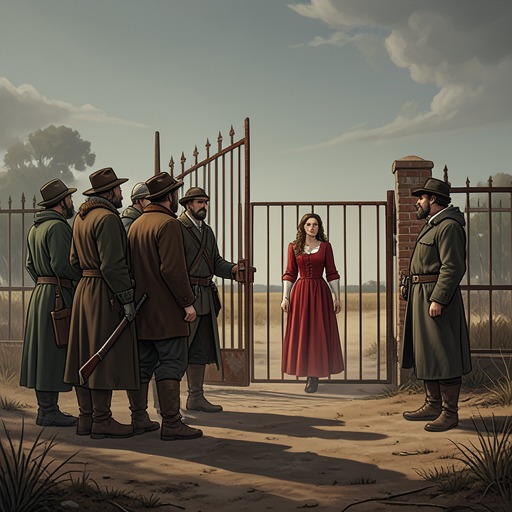
At Bathsheba’s entrance, Troy goes inside and leaves Boldwood waiting outside. He returns behind a chained door with a candle and passes a folded newspaper through the narrow opening. The notice records that Francis Troy, a sergeant with the Dragoon Guards, married Bathsheba, only surviving daughter of John Everdene, at St. Ambrose’s Church in Bath on the seventeenth of the month. By making a printed announcement the instrument of revelation, the scene turns Boldwood’s private bargain into a confrontation with an already completed marriage.
Troy answers Boldwood’s payment proposal by setting out its reversal: Boldwood had offered money for marriage to Fanny, then money for Troy not to marry Fanny and instead marry Bathsheba, but Troy is already Bathsheba’s husband. He says that Fanny has long since left him and that he has searched for her without knowing where she is. He also rebukes Boldwood for accepting apparent evidence of Bathsheba’s dishonor as sufficient proof against her. Then Troy refuses the money, wraps the gold and notes together, and throws them into the road. Boldwood rejects the gesture as well as the humiliation, threatening punishment; Troy closes and locks the door.
Recognition and Public Consequences
The following morning, Gabriel and Coggan pass Bathsheba’s house before five. They see Troy leaning from an upper window, his red jacket loosely worn. Coggan concludes that Bathsheba has married him; Gabriel, who has already seen the scene, turns away and cannot initially answer. The image confirms what he had feared after Bathsheba’s journey to Bath, but it does not explain how the marriage came about. Gabriel had wondered whether she might have been entrapped, because secrecy was unlike her usual candor; the newspaper revelation establishes the marriage, not the full circumstances behind it.
Gabriel’s response is outwardly restrained. After a pause at the gate, he decides that, since the deed is done, making the best of it will be the greatest kindness to Bathsheba. He returns Troy’s cheerful morning greeting, though in a voice described as faint. The scene sets private disappointment against public civility: Gabriel’s affection does not give him authority over Bathsheba’s decision, and his immediate choice is to spare her further difficulty rather than challenge her husband.
The marriage is publicly celebrated later at the farm’s harvest gathering. At the end of August, while Bathsheba’s experience of married life is still new, Troy presides over the revel in the great barn. He announces to the assembled workers that the occasion is both a harvest home and a wedding feast, explaining that he and Bathsheba have only now been able to mark their marriage publicly in Weatherbury. His announcement converts the hidden fact disclosed by the newspaper into a public event at the farm, while also displaying his new position in the household: the narrator describes him as ruling in his wife’s place.
Marriage, Work, and Consequences
The public celebration exposes a difference in judgment between the newly married couple. Gabriel has noticed threatening signs in the weather and warns that heavy rain is likely to damage the uncovered ricks. Troy dismisses the warning as a fidget and says it will not rain. At the feast, Bathsheba asks him not to serve the workers more brandy because they have already had enough; Troy ignores her concern, sends the women and children away, and pressures the men to remain for more drinking. Bathsheba leaves the barn, followed by the women and children. The contrast between her concern for the workers and Troy’s disregard makes their differing approaches visible within the farm’s public life.
The marriage also places Bathsheba’s position as farmer at risk. When Troy is later absent for days, she considers the possibility that he will return and that their tenancy of Upper Farm will then be over. The estate’s agent had initially distrusted her succession to James Everdene because she was young and a woman, but her uncle’s will, his testimony about her abilities, and her forceful management of the livestock had established confidence in her. After the marriage, however, she does not know what legal effect it may have on her standing; her change of name has attracted no notice so far, but she understands that failure by either spouse to meet the agent at the January rent-day could mean eviction. Poverty would follow the loss of the farm. The secret marriage therefore alters more than Bathsheba’s romantic status: it unsettles the material basis of the independence she had built through work and management.
The disclosure is structured around reversals. Boldwood attempts to use money to shape Troy’s marriage, only to learn that the marriage has already occurred; Gabriel recognizes the fact before it is spoken to him, then chooses courtesy; and Bathsheba’s public wedding celebration unfolds alongside signs that her husband may not protect the farm’s interests. The event does not resolve the novel’s romantic tensions. Instead, it begins a marriage whose consequences extend into personal grief, household authority, and the precarious security of Bathsheba’s livelihood.